
Guideline for the preparation of the Operations Management Plan (OMP)
This article is in the process of being written
- BACKGROUND INFORMATION
- STEPS IN DEVELOPMENT AND DOCUMENTATION
- INTRODUCTIONS: DESCRIPTION OF THE DOCUMENT
- ACTUAL CONTENT
- Step: 4 – Introduction to the Institution, Department or Unit
- Step: 5 – Describe the Functions, Services Objectives and Service Products of the Institution
- Step 5a – Indicating the Core Functions
- Step 5b – Describing Clinical Functions, Services, Objectives and Service Products
- Step 5c – Describing a Clinical Department or Unit
- Step 5d – Describing Clinical Support Functions
- Step 5e – Describing Facilities and Systems for Service Delivery
- Step 5f – Describing the Clinical Administrative Functions
- Step 5g – Facilitation of Training and Education
- Step 6 – Describe the Organization of the Institution
BACKGROUND INFORMATION
Introduction
The purpose of this article is to provide healthcare managers and care providers with
- some background information about Operations Management
- a guideline on how to develop, document and implement the plan for the management of the operations of healthcare services
In a service industry like healthcare, the equivalent term for operations is service delivery. It is essential that the institution develop a documented plan on how to run its business operations, and that of departments or units. The plan may have various names but is here named as the ‘Operations Management Plan’ (OMP).
Disambiguation of Terms
Operations Management
Operations refer to all efforts taken by the institution, department or unit to deliver the intended service.
Management is a social process consisting of planning, leading and regulating the operations of an enterprise or sections within it. The full spectrum of the activities of management is:
- Planning: setting goals and creating a strategy to achieve those goals.
- Organizing: putting the plan into action by creating a structure and assigning tasks.
- Staffing: recruiting, hiring, and training employees to carry out the plan.
- Leading: motivates and guides employees to achieve the organization’s goals.
- Controlling: monitoring progress toward the organization’s goals and taking corrective action when necessary.
Hence, Operations Management is how the operations of production of goods or delivery of services are managed.
Meaning of Plan, Design and BPR
In this context, the term ‘plan’ refers to the description of the proposed way the service is to be delivered and not the schedule of work for a certain period. Equivalent terms for the document describing this plan are Business Plan, Business Operations Plan, or Business Process Design. In this article, it is here named as the ‘Operations Management Plan’ (OMP).
Business Process Re-engineering (BPR)
Another popular term is Business Process Re-engineering or Business Process Re-design (BPR) where the existing way the business is run is changed in response to new needs e.g. product design or approaches e.g. change in technology.
Business Process
The term ‘business process’ is poorly understood. ‘Business’ refers to any organized endeavor that leads to the realization of defined benefits. It is not necessarily commercial. In this context, ‘process’ refers to the series of actions or steps in achieving that benefit.
| Meaning of PROCESS |
|---|
| 1. a series of actions, changes, or transformations bringing about a result. 2. a continuous action, operation, or series of changes taking place in a definite manner |
| Examples of the first meaning include learning process, peace process, and process of rethinking strategies and policies. Example of the second meaning include work process i.e. basic units of work making up a procedure. |
‘Business process’ means the way the business is run. It should not be confused (as often thought by people from some sectors) with work processes, even though many of the methods involve the design of workflow and processes.
| Meaning of Business Process |
|---|
| A business process is a set of activities and tasks that, once completed, will accomplish an organizational goal. A business process can also be defined as a collection of linked tasks that ends in the delivery of a product or service to a client. The process must involve clearly defined inputs and a defined output. These inputs are made up of all the factors that contribute (either directly or indirectly) to the added value of a product or service. These factors can be categorized further into the following categories: |
| A. Management processes The activities of managing a particular organization’s system of operation. B. Operational processes The tasks used to transform the input into the output or outcome. C. Supporting processes, The activities of putting in place ingredients such as information, communicational and belief systems to support the core business processes. |
Healthcare institutions are built to provide services for care of the sick or for improving health or both.
| Services |
| A service is an intangible product consisting of activities that provide benefit to a person receiving it |
| Service Products |
| In healthcare service delivery, the service product is outcome of the care given plus the experience of going through the activities used to achieve that outcome. |
The Operations Management Plan is designed according to type of institution and the services it provides.
| Procedures |
| A set of processes. |
| Operating Procedures |
| The procedures that must be carried out to produce a product or deliver a service that fulfils the desired outcome. |
| Standard Operating Procedures |
| The one way that procedures should be performed in terms of the methods, sequence, decision making steps and the rules that should be followed. |
Role of Business Process Design or Reengineering (BPR) in the Management of a Project
Institutions are designed and built to meet the needs of its functions. The core function of a healthcare institution is care of the sick. Hence, the comprehensive requirements for its infrastructure, staffing, policies and procedures need to be determined and described (documented) clearly. For a new institution, the design can be developed from scratch based on best practices or benchmarks (Business Process Design).
For an existing institution, improvements and upgrades in approaches, technology, techniques, policies and procedure can be made through Business Process Redesign or Reengineering.
Health care providers and managers have acquired knowledge and experience in the running (operations) of a hospital and the conduct of its services during their training and work. They are experts in their area of involvement and would be the main contributors to the conception of the design.
A consultant may be appointed to help organize the exercise and put together the result which is collated as a documented plan termed as the ‘Operations Management Plan’. This plan must be backed by Standard Operating Procedures which are documents describing the policies and procedures in detail.
Gap Analysis
If a new Business Process has been designed, the institution should evaluate the difference between the new way of doing things and the previous way in all aspects. Hence, the Operations Management Plan and the Standard Operating Procedures would be the desired standard (benchmark). It will be used as the criteria to determine the requirements and specifications for the new facility and system (business process design) or for changes to be made to an existing facility or system (BPR).
Reengineering to Accommodate the Introduction of a Computerized Information Management System.
The most common need to perform reengineering is when the organization decides to introduce a computerized information management system. When acquiring a computerized system, the institution has to evaluate it in terms of the following:
- comprehensiveness, adequacy
- usability
- acceptability
- cost-effectiveness
Gap Analysis of the Information Management Systems
Information Management Systems procured for a hospital take the form of readymade off-the-shelf mix of systems that are integrated at implementation. Building systems from scratch is not advisable. Hence, the activity of gap analysis could happen when evaluating the information management system at the time of procurement. If a system is already procured, then a gap analysis may be done to identify deficiencies in scope or shortcomings in design. The aim is to enhance the system by suggesting modifications to it.
However, the gap analysis should not be confined to assessing the Information Mangement System alone, the scope must be wider as mentioned earlier.
Change Management
Following a Business Process Re-design or Business Process Re-engineering (BPR) where the existing way of running the business is changed, the change itself has to be managed. This is not easy because there is often resistance to change and also a lack of clarity as to the degree of change. At the outset the managers and workers would likely ask the question “Change from what to what?”. The documented Operations Management Plan and the Standard Operating Procedures are invaluable in setting the direction of the change and describing the details of the changes to be made. Change management is about winning over staff at all levels by stimulating enthusiasm and bringing out their commitment.
In the case of the introduction of a computerized information system, many ways of conducting processes would change. Healthcare personnel would welcome the ease of obtaining and sharing of information but may find the need to follow procedures strictly and use standardized terms rather troublesome. It is necessary during the change management process to explain to the healthcare workers and other staff regarding why the standard procedures are designed in a particular way and the benefits of adherence to it.
Systems Theory of Operations Management
The operations of a healthcare institutions are executed within a complex system. The design of the institution and the facilities can be understood through the general Systems Theory of Operations Management (summarized in the figure below).
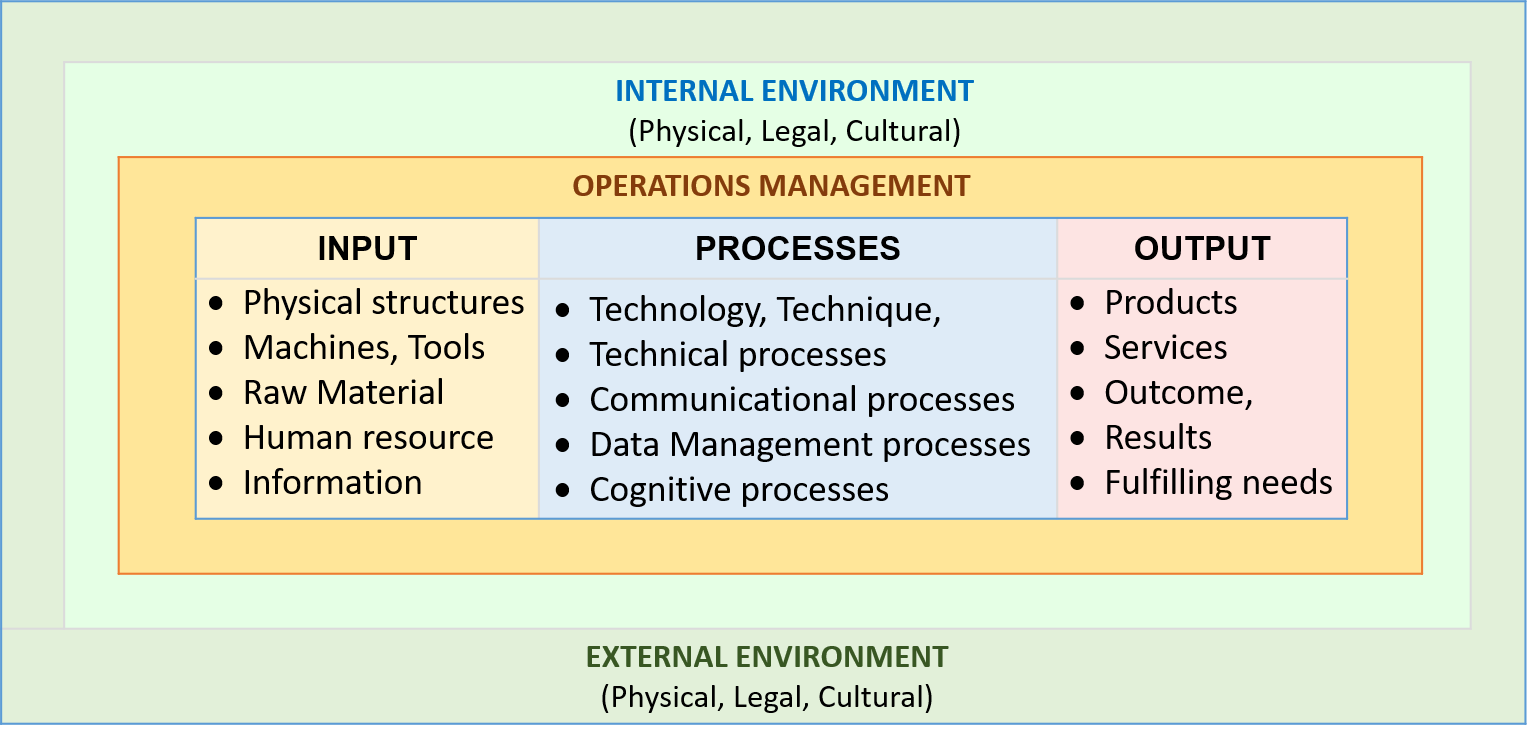
When applied to healthcare, parts of the system can be elaborated as shown in the diagram below.

Development and Documentation of the Operations Management Plan
The Operations Management Plan describes the way the operations is to be managed or in other words how service is to be delivered. To ensure that the plan prevails over time and be a valid source of reference it must be documented.
The scheme to be followed to bring about the success of this effort would be:
- Plan: Setting objectives and deliverable, the steps and the timeline.
- Participation: who should be involved.
- Responsibilities: Lines of authority, decision-makers, policies for implementation and the like.
- Method: The overall approach to all activities and how to manage the endeavor.
Responsibility for Preparing the Management Operations Plan
The responsibility for preparing the Management Operations Plan is with the upper management of the institution (Director or Chief Operations Officer). He or she is also responsible to ensure that departments and units the institution prepare their own plans. In areas sharing common functions, the upper management and heads of department and unit share the responsibility. In practice, he or she can appoint a work team to prepare and document the plan under his or her supervision. Similarly, the head of departments or units are responsible for designing the management plan and subsequently their standard operating procedures. They too need to form teams to do the task.
The Plan as a Deliverable
Preparation of the Management Operations Plan must be treated as a project. It should follow project management principles and steps. The deliverable is a documented plan of how the institution, departments or units are to be run. It is undertaken to bring about uniformity, beneficial change or added value. The effort has a defined beginning and end. It requires funding and takes time of staff away from their usual work.
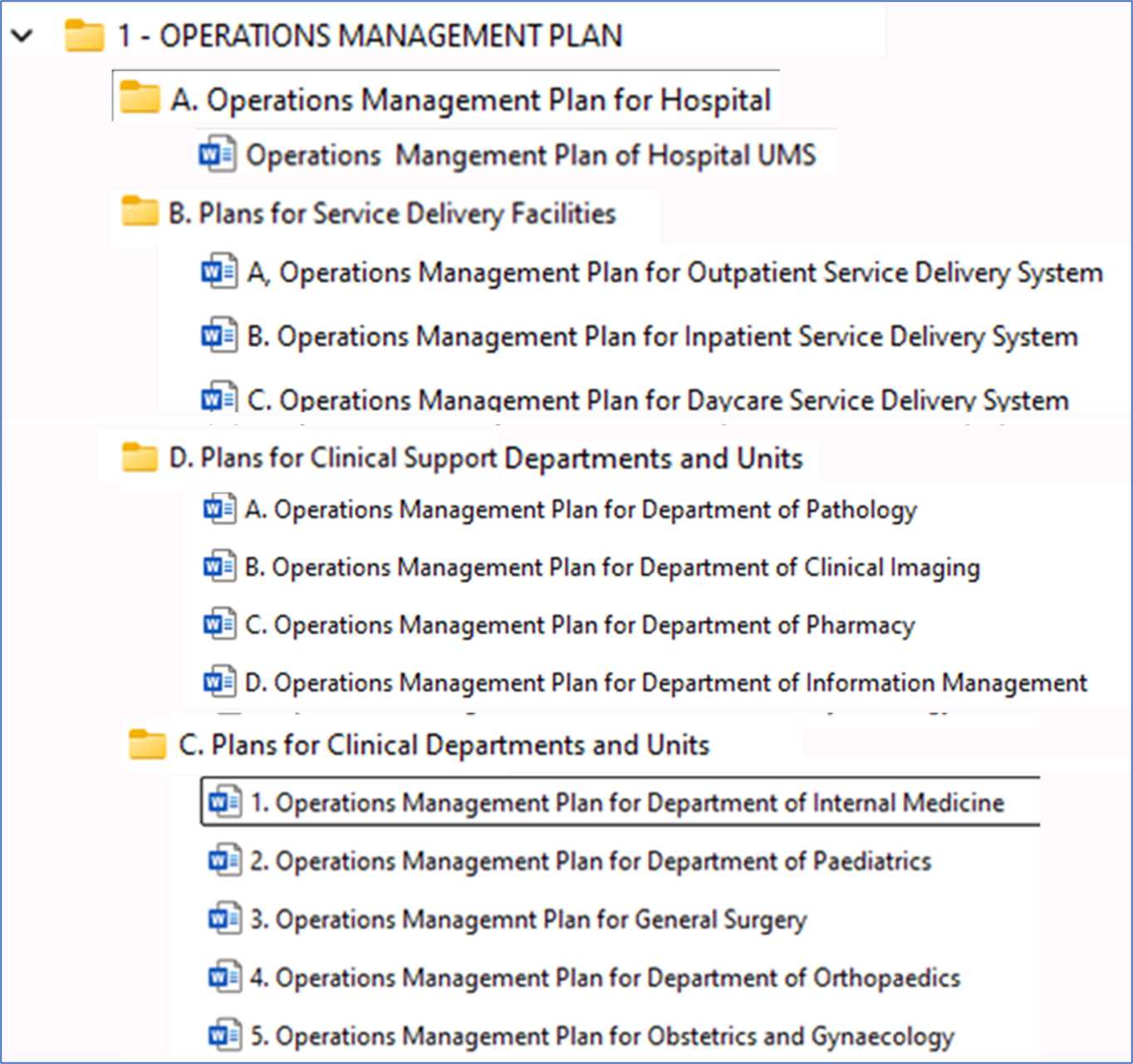
The Operations Management Plan for the institution (e.g. hospital) is the lead (mother) plan. It must be supplemented by the plan for various facilities, departments or units under it. Variations will be explained and examples given in this article. Then, to enable the delivery of services this plan must be supported by Standard Operations Procedures (SOP) for each service product it offers. The SOP should describe how the service product is to be delivered to clients in a safe, effective, and efficient manner. The plans are arranged according to the following hierarchy.
Hierarchy of Plans
- Operations Management Plan for the Institution
- Operations Management Plan for Departments and Units
- Standard Operating Procedures for various services within departments and units
- Operations Management Plan for Departments and Units
When documented, in digital format or on paper, the three groups of plans are compiled as separate sets of documents and placed in separate folders.
Standard Operating Procedures (SOP) are developed and documented for every service product, indexed and compiled as a manual.
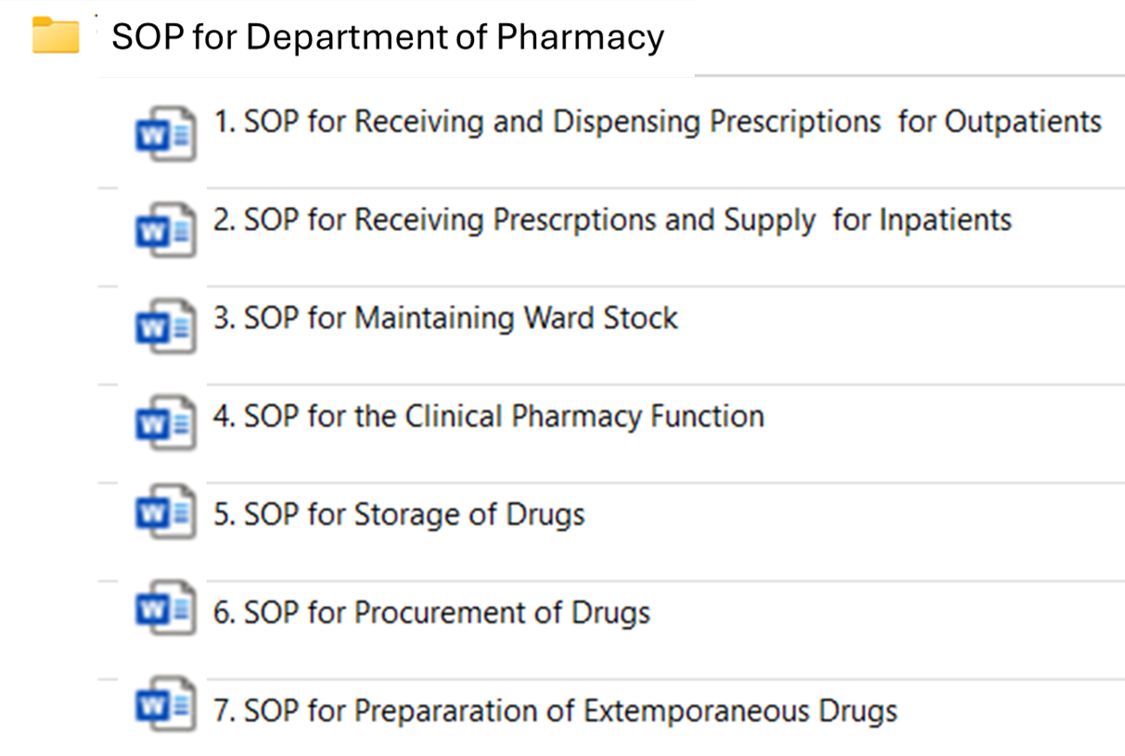
The guideline on the development and documentation of Standard Operating Procedures (SOP) will be given in another article.
Method of Development and Documentation of the Plan
The development of the plan and its documentation should be performed concurrently. The development is the primary activity. The documentation is secondary. The best approach is for the principal and subsidiary teams to gather all necessary information, deliberate over them, and design the plan. The team will then produce a draft document describing the plan which will be improved on until a satisfactory final plan is realized.
Another approach is to employ a consultant to do part of the task. He or she will gather information and prepare a draft plan and submit it to the institution, departments and units.
The documented draft plan should then go through the process of editing, simulated trial implementation, correction, and endorsement before being accepted. The plan should be studied to determine its impact on efficiency, cost-effectiveness, acceptability and feasibility when implemented. Only after all these steps (the PDA cycle) has been done should the documented plan be formally endorsed by the upper management. The plan itself is insufficient to enable the institution to carry out operations of its services. It must be complemented by Standards Operating Procedures and work instructions for each of its service products.
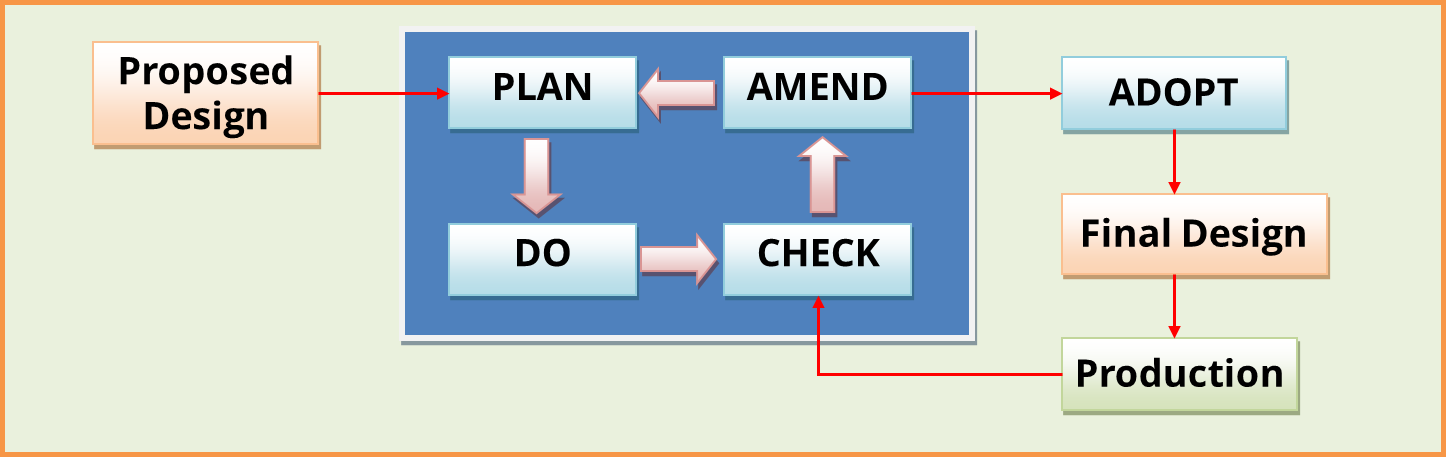
Even so, the plan should be continuously appraised and improved upon whenever necessary or at least yearly.
The Planning Approach
In the planning of the business process of a health care institution, its departments and units, it is best to use a combination of the following approaches:
- Top-Down Method
- Bottom-Up Method
- Participative method
- Team method
A mix of methods offer flexibility and cater for different needs. Care providers by training and experience know how to perform their function. During their long period of training and working experience, they are familiar with roles of various units, the interaction between them and the way services are organized. They are also aware of the professional responsibilities and ethics. Managers provide direction but must consider input from all categories of staff. Care must be taken to ensure that views and ideas lead to a shared goal. The mix of methods should strike a balance and encourage collaboration.
Therefore, development of the plan must involve the upper management and as many staff members as possible in an open discussion through brainstorming or group discussions. This will imbue the outcome with a sense of ownership and promote compliance. The tasks can be distributed and shared by assigning them to relevant teams. The best approach is for the principal and subsidiary teams to gather all necessary information. The documentation should be done concurrently. The documented draft plan should then go through evaluation and modification in an iterative fashion. The process of development includes editing, review, modifications, trial implementation, and endorsement by the upper management before being implemented.
If a consultant is employed, his or her role is to guide the preparation and do part of the task. He or she will gather information through interview and observation. He or she will prepare a draft plan and submit to the institution, departments and units.
CONTENT AND STRUCTURE OF THE OPERATIONS MANAGEMENT PLAN
The plan is the product of what has been thought out and decided. The flow of thought goes from the general to the specific. The purpose of documentation is to keep an intact record of what has been decided. Hence, the activities should be recorded as a log and the outcome should be documented as drafts of the plan. The final version documented plan must be formally endorsed by the management of the institution. It will be a policy document (an official statement of intent) to be disseminated and followed by everyone in the organization.
A main Operations management plan must be developed for the institution and separately for each of its section, department or unit. The structure and content of the plans are similar, except that for the latter is subsidiary to the former.
In general, the activity of planning consists of the following steps:
- Identifying goals and objectives of the Institution, Department or Unit (reason for its existence).
- Defining the scope and types of facilities, services and products that is provided.
- Determining the organizational structure that governs the management of the service
- Identifying the needs of various clients (patients) and convert them into objectives of the services to be delivered.
- Proposing the policies procedures and standards for the service and service products.
The plan for the whole institution must be developed first.
The plan for the for the service delivery facilities and clinical departments or units, are developed subsequently and must be streamlined with the goals, general polices and approaches of the institution. of the institution. The scope and content can vary slightly or be vastly different from the plan for the institution, based on their functions. For example, it may not be necessary to repeat the institution’s strategic aspirations, general, polices and approach
The outcome of the discussion, deliberation, and discussions made will form the structure and content of the proposed Operations Management Plan. The documentation of the plan follows the same sequence and content. This will be discussed in detail later.
STEPS IN DEVELOPMENT AND DOCUMENTATION
In this part, I will elaborate on the suggested steps in developing the plan and documenting it. The purpose of the list is to ensure that all aspects have been thought of. It may not be possible to discuss all aspects at once, but the necessity of the need to deliberate on some issues may not be apparent or may not be feasible until after subsequent steps are reached or completed. Hence, some steps must go through iterations (drafts) before they are finally documented. The arrangement of the document is in two parts i.e.
- Description of the document
- Actual content
Description of the Document
- Identity (Name of the Plan)
- Brief description of the document
- Intended use (purpose)
- Relationship (links) to other documents (policies and procedure)
- History of development of the plan
- Index of the content
Actual Content
- Introduction to the service (institution, department or unit)
- Strategic Plan (Vision, Mission, Goals and Objectives)
- General Policies, Operational Policies dan Procedures (Use of Standard Operating Procedures)
- Functions and Divisions of the Service (institution, department or unit), Services and Service Products
- Service Delivery Systems
- Clinical Patient Care
- Clinical Support
- Information Management
- Training and Education Functions
- Organization
- description, chart, positions with names identified
- Liaison and channels of communication (directives, feedback, committees)
- Internal (within institution, department or unit)
- External (with clients and stakeholders)
- Quality management (productivity, efficiency, product quality, standards, quality control, quality improvement)
- Human Resource Management (Staff employment, Training and Education)
- Budgeting
- References (laws, rules, regulations, policies, procedures and instructions).
INTRODUCTIONS: DESCRIPTION OF THE DOCUMENT
Step 1: Identify the Documented Plan
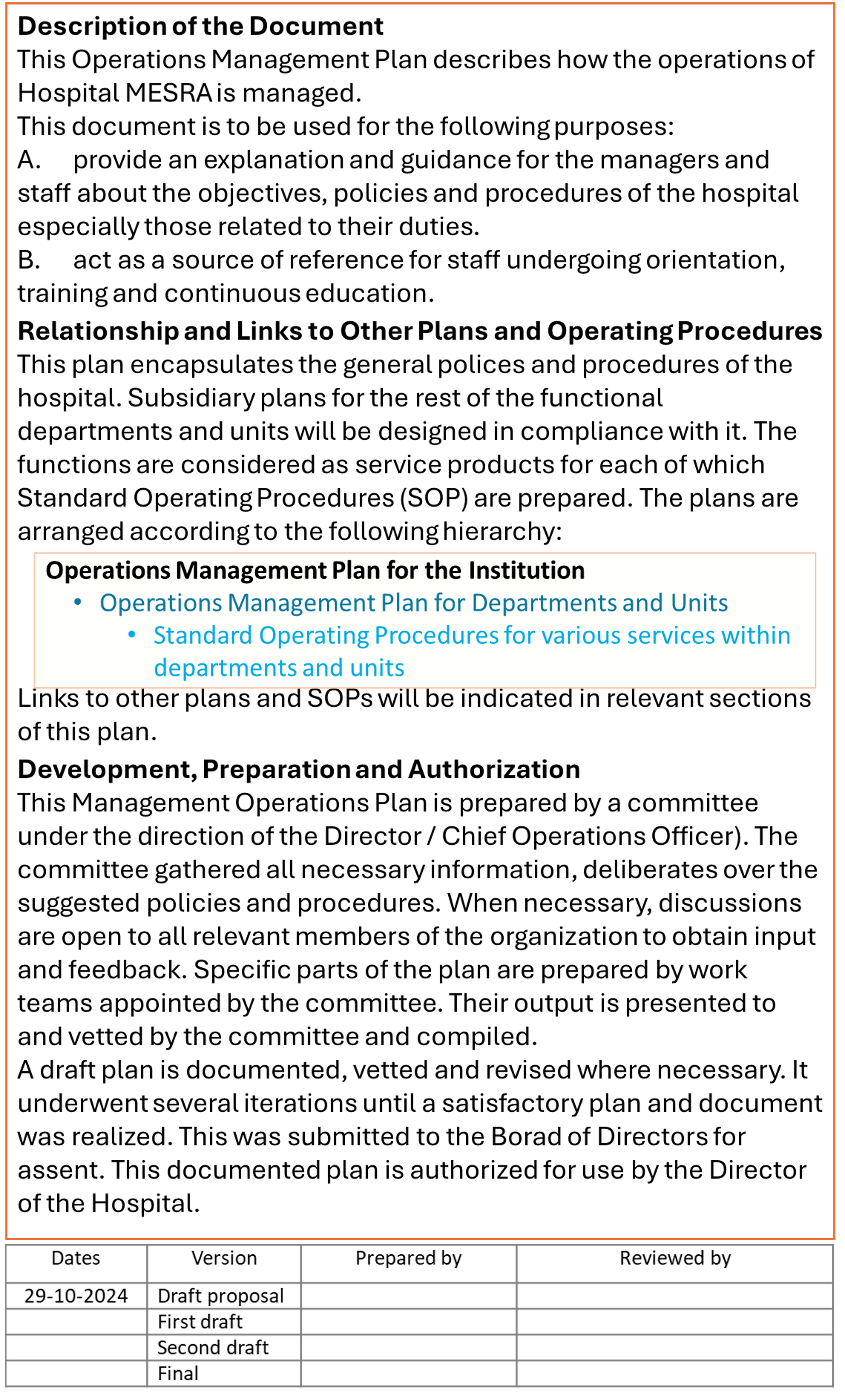
What is being developed must be clear at the start. On the front page, identify the documented plan by its name. Indicate whether it is for the institution (e.g. hospital) or departments or units. Give it a serial number. Indicate its authorization status and version (dates, signature and name of person). Below is an example.

Step 2: List the Contents
Create an index or table of contents consisting of the list of subject matters that was considered, deliberated and decided upon during the activity of operations planning. It indicates the sequence of steps taken. In the document the order of the subject matter is given as the Table of Contents written on the second page. The steps and order of the contents are equivalent.
The table is easily created if the document is written on a word processor like MSWord™. An example is shown below:

Step 3: Provide a Brief Description of the Plan
On the third page, provide a brief description of the documented plan, including
a. what it is,
b. the purpose,
c. how it is linked to other documents,
c. the history of its development, endorsement and authorization.
Explain What the Plan is All About
The Operations Management Plan describes the way the operations is to be managed or in other words how service is to be delivered by the hospital, its departments and units.
Indicate the Purpose of the Operations Management Plan
The the documented plan will be used for the following purposes:
- provide an explanation and guidance for the managers and staff about the objectives, policies and procedures related to their duties.
- act as a source of reference for staff undergoing orientation, training and continuous education.
- act as reference document for the exercise of change management
- provide the basis for analysts and programmers to modify and further develop the design of the systems and applications of the Hospital Information System being supplied to the hospital.
- act as reference document for the evaluation of policies and procedures by external bodies involved in the commissioning of the hospital (i.e. by government agencies), award of accreditation (e.g. by Malaysian Society for Quality in Health MSQH, Malaysian Qualifications Agency MQA and quality assurance audit (e.g. ISO 9001 audit).
Links to Other Documents
Indicate the relationships between the various plans and documents. The Operations Management Plan for the Hospital would be the lead (mother) document governing the plans for departments and units to which it is linked. The plan itself must demonstrate the links to Standard Operating Procedures for its service products.
Give an Account of the History of Development
A statement must be made on how, when and by whom the plan was developed and documented (versions: drafts, final version with dates).
ACTUAL CONTENT
Step: 4 – Introduction to the Institution, Department or Unit
As an introduction at the beginning of the plan, a brief description of the Institution or department or unit and the services it provides is made. The items indicated below should be described.
Step 4a – Brief Description
When describing an institution:
- indicate name of the institution and:
- whether it is a hospital, polyclinic, primary health clinic. general practice clinic, stand-alone day care unit
- location and geographical area that it serves
When describing a hospital the following should be indicated:
- whether a general or specialist hospital (a general hospital would provide 10 , 20 and 30 level services). Identify the source of referrals. If a specialist hospital, name the specialties available.
- funding (government, private, NGO or welfare)
- whether it is a teaching hospital (name the affiliations)
Types of Healthcare Institutions
The Operations management plan must match the type of healthcare delivery facility. Healthcare services are delivered at various types of service delivery centers depending on the variety of service delivery facilities and systems they offer. The common types are:
- Hospitals
- Standalone outpatient clinics (polyclinics)
- Daycare centers
- General practice clinics
Hospitals
Hospitals can be general hospitals or specialist hospitals. General hospitals cater for all types of patients and provide services at mainly at primary, and secondary levels of care although they may offer tertiary services for some types of illness. The distinguishing feature of hospitals is that they provide inpatient care therefore facilitating the management of acute care and complex illnesses. The primary level care may be offered at outpatient clinics or the emergency department within the hospital. Many hospitals also provide day care services.
Stand-alone Polyclinics
Stand-alone polyclinics offer outpatient services. New patients avail themselves to services as walk-in patients or by appointment. A triage procedure is necessary to determine whether the patient can be treated as an outpatient of require immediate attention or inpatient care. Patients may be referred to clinics from hospitals for continuation of care or rehabilitation (follow up). Normally stand-alone polyclinics offer primary and secondary level services but depending on human resource and facilities available they may offer certain types of tertiary service.
Stand-alone Day Care Centers
Stand-alone day care centers provide residential care for not more than a day. Patients are able to return home, after their treatment. The day-care differs from out-patient services in that they are suitable for carrying out treatment or procedures that require monitoring and observation for a limited period of time. Hence, patients requiring intense and longer periods of monitoring need in-patient care.
General Practice Clinics
General practitioner clinics provide primary care for a wide range of health problems including
- wellness care (promotive, preventive),
- initial detection and diagnosis
- comprehensive care of common chronic or recurrent illnesses
- rehabilitative care
The scope of services provided by general practitioner clinics are limited by the availability of diagnostic, monitoring and treatment facilities.
Types of Departments or Units
When introducing a department or unit indicate whether it is:
- a clinical department
- a clinical support department
- a service delivery facility or system
- an information management department
Indicate its contribution to the entire operations of the institution.
Step 4b: Describe the Vision, Mission, Goals and Objectives
In this section, describe the strategic plan of the hospital or departments or units. Healthcare is the delivery of services concerned with health. It covers a broad area containing segments distinguished by aims that include:
- keeping persons healthy
- prevention of diseases
- provision of care for people who are sick
Vision, Mission, Goals of an Institution
For an institution, the strategic plan is stated briefly as the Vision, Mission and Goals of the institution. If the institution is part of a larger organization or corporation quote the vision, mission of that organization first. The departments and units share this strategic plan. It is unnecessary for them to have their own but should convert its components to operational policies, methods and procedures.
Vision
The vision statement describes the desired future state of the institution and is for the benefit of both members of the institution and the public at large.
Mission
Mission statement indicates the institution’s functions, its role in the nation, community and people at large, its goals and the approach it takes to deliver those functions and meet goals.
Goals
Goals are general statements of intent of what the institution want to achieve.
Healthcare is the delivery of services concerned with improving health. It covers a broad area distinguished by aims that include:
- keeping persons healthy
- prevention of diseases
- provision of care for people who are sick
Services are provided by organizations through systems designed to cater for the type of services they provide. The scope can be confined to wellness-care or patient care or a mix of both. However, depending on the focus, healthcare institutions have two purposes:
- care of the sick
- wellness care
The wellness care service is aimed at achieving these set of objectives:
- promotion of health
- primary prevention of disease (stopping the occurrence of diseases)
- early detection of diseases (screening)
This article deliberates on the delivery of care of the sick often termed as ‘patient care’. Even so elements of wellness care need to be included in some instances and situations. A wide variety of strategies, methods and modalities are available to the care provider. Their selection depends on the treatment objectives which may include any or all of the following:
The institution may further define the goals with regards the desired characteristics (listed below) that it hopes to achieve.
- Accessibility
- Productivity
- Effectiveness
- Appropriateness, acceptability
- Efficiency, Timeliness
- Cost-effectiveness, value for money
- Quality
- Safety
- Privacy and confidentiality of information
It sufficient that these are stated in general terms. It is preferable that the Vision, Mission and Goals applies to the whole organization so that it is sufficient for the departments and units to indicate that they will adhere to them. However, objectives of departments and units will be different and has to be mentioned in their plans.
Stating Goals as a Client Charter
The Client Charter is a written set of pledges and undertaking by service providers to users of services. Usually, it defines the characteristics of the service offered to its external clients i.e. patients especially those related to:

Step: 5 – Describe the Functions, Services Objectives and Service Products of the Institution
When developing and writing the main OMP for the institution the functions and services are indicated briefly. However, when writing the OMP for departments and units the functions and services are described in detail such that services are further divided into service products and policies are elaborated as operational policies.
Functions of the Institution
The functions of a healthcare institution like a hospital can be divided into the following:
- The core business of providing healthcare to its clients
- Managing the hospital as a business entity,
- Managing the hospital as a provider of hospitality services and
- Managing the physical facility
Functions are translated into services. Each service has unique objectives and require certain approaches and methods. It is delivered at appropriate service outlets and by service providers with special set of knowledge and skills.
Patients access services through service facilities. Initially it would either be outpatient services (clinics, emergency units). Later their care would be provided at facilities appropriate to their needs. Costs determine accessibility and impacts on the viability of the institution. The effectiveness, quality and safety of the services depends on adequacy plus appropriateness of
- resources,
- expertise and
- methods used.
As mentioned earlier, the upper management of the institution (Director or Chief Operations Officer) must develop a plan for the whole institution. He or she has to indicate how the functions of the institution are divided. The functions and divisions need to be named, listed and described briefly.
In their plans, the leaders of these divisions (departments and units) must prepare their own plans. In areas sharing common functions (like service delivery systems), the upper management and heads of department and unit must assist the person in charge to develop the plan. They will then describe the functions of their units in greater detail.
The services provided require certain approaches and methods and at a wide variety of outlets and by service providers with a different set of knowledge and skills.
The Operations Management Plan for the institution (e.g. hospital) is the lead (mother) plan. It must touch on all the above functions such as the management of general administration, human resources, resource allocation, finance. public relations, customer relationship management and operations-maintenance of the physical facility. This article focuses on the developing plans for the function of a hospital as a patient care service. Certain aspects of other related functions will be touched on only briefly.
Divisions Based on Functions and Objectives
Services are provided by organizations through systems designed to cater for the type of services they provide. The scope can be confined to wellness-care or patient care or a mix of both. However, depending on the focus, healthcare institutions have two purposes:
- care of the sick
- wellness care
The wellness care service is aimed at achieving these set of objectives:
- promotion of health
- primary prevention of disease (stopping the occurrence of diseases)
- early detection of diseases (screening)
The services provided require certain approaches and methods and at a wide variety of outlets and by service providers with a different set of knowledge and skills.
This article deliberates on the delivery of care of the sick often termed as ‘patient care’. Even so elements of wellness care need to be included in some instances and situations. A wide variety of strategies, methods and modalities are available to the care provider. Their selection depends on the treatment objectives which may include any or all of the following:
- Remove or minimize effects of illness
- Maintain, restore or improve the health status
- Avoid or minimize complications of treatment
- Prevent deterioration or recurrence
The role of the hospital management is faciliatory. Hence, a brief description of its function is sufficient. The delivery of services requires the involvement and collaboration of many functional divisions (detailed below).
Service Products and the SOP
The Operations Management Plan for the institution must be supplemented by the plan for various departments or units under it. Variations in the structure and content will be explained and examples given in other articles. To enable the delivery of services the plan must be supported by Standard Operations Procedures (SOP) for each service product it offers. The SOP should describe how the service product is to be delivered to clients in a safe, effective, and efficient manner.
Products are the results of operations. In manufacturing it would be goods. In healthcare service delivery the result would be the outcome to the care given, but it includes the experience of going through the care process.
In hospitals, service products are delivered at the level of departments and units. A service product is a set of activities, known as clinical care processes, carried out to provide care for a patient belonging to a specific case type usually based on diagnosis.
The guideline on the development and documentation of Standard Operating Procedures (SOP) will be given in another article.
Differences Between Operations in Service Delivery vs Manufacturing
The operational policies and procedures used to deliver services are quite different from that to produce goods. This Operations Management Plan focuses on the aspect of managing the service delivery. Even so, there are units within a healthcare facility where the operations involve the production of products such as the food-beverage in the kitchen, blood products blood-bank, dentures, and extemporaneous drugs in the pharmacy.
Step 5a – Indicating the Core Functions
The functions of a hospital’s patient care service require the involvement and collaboration of many functional divisions. The functions and services can be divided into:
- Clinical Functions
- Examples of services include Surgery, Medicine, Obstetrics, Rehabilitation, Optometry, Audiology, Social care, Psychology etc.)
- Clinical support functions
- the services delivered include Laboratory, Imaging, Pharmacy, Endoscopy, Blood Bank, Central Sterilization-Supplies, Information Management services.
- Clinical administrative functions
- the services fulfilling this function include reception, registration, appointments, scheduling and resource allocation.
This division of functions and services are reflected in the way the hospital is organized. In hospitals, the actual service (service products) are delivered by departments and units rather than the hospital itself. The hospital’s role is faciliatory. Hence, the description of their function and services as outlined above is sufficient.
The description narrated below is for when the plans for individual departments and units are created.
Step 5b – Describing Clinical Functions, Services, Objectives and Service Products
Clinical departments and units provide the core services of the hospital. Its main objective is to provide clinical services for defined patient groups. It is sufficient to indicate the service products it intends to deliver as a list. Specific service products and their objectives are indicated in the Standard Operating Procedures.
The clinical function is performed by clinicians i.e. care providers involved directly with activities of patient care. Clinicians include not only doctors and nurses but also Therapists, Dietitians, Clinical psychologists, Counselors, Clinical Pharmacists, Clinical Microbiologists, Interventional Radiologists, Endoscopists, Optometrists, Audiologists and many others. Their work is characterized by:
- face to face interaction with patients
- the performance of procedures that affect patients physically, physiologically or psychologically.
The clients of a health care facility are usually people who are sick (patients).
Clinical services are provided by departments and units whose scope are based on areas of expertise. These areas are distinguished by and divided according to:
- morphology (anatomy)
- disease process (pathology)
- treatment modalities
- intensity of care
Often departments are divided functionally based on anatomical regions or organs. Beyond that, there may be divisions based on the pathology involved (e.g. oncology. trauma. infection). Then, they may be further divided based on the areas of focus. Units may be divided based on the main modality used i.e. medical, surgical, physical or psychological. Some units perform a part of the clinical care process such as facilitation of the performance of procedures, assessments and rehabilitation.
Describing the Clinical Care Process
The management of illnesses follow a well-developed clinical care procedures and processes as practiced by clinical care professionals universally. They are as listed below:
- Collection of information about the patient and his/her disease
- Determination of the diagnosis and needs of the patient based on the analysis and interpretation of available data.
- Planning the case management
- Treatment
- Review of the progress of the disease
- Monitoring of the effects of treatment
- Determining the outcome
- Review of diagnosis and management
- Continuation of care or final disposal of the case
Hence besides the requirements (facility, equipment, information and raw material), the staff carrying out the processes need to have knowledge, expertise and the right attitude. Therefore, the management must ensure that they possess the necessary credentials and be assigned the appropriate privileges to perform them. Also, the outcome of healthcare services depends very much on the professionalism, culture and ethics of care providers.
Clinical Service Products
If the products of services are described by equally uniform characteristics and outcomes, they can be called service products. In patient care the service product is the outcome of the care process and also the experience that the patient goes through to obtain that outcome. The experience is as important as the outcome. It is determined by the design of the service delivery system which is the interplay between the inputs, the techniques used, the sequence or order of the processes and how they are laid out. The input, processes and the work environment should complement each other. they have fairly uniform output characteristics. The policies and procedures can be made to be followed fairly rigidly for which a Standard Operating Procedure (SOP) can be designed.
Step 5c – Describing a Clinical Department or Unit
In the plan for the institution (e.g. hospital), only a list of the clinical departments or units and a brief description is to be indicated.
Indicate the following are:
- area of specialty by scope, patient type and/or disease category (Surgery, Medicine, Obstetrics, Rehabilitation, Optometry, Audiology, Social care, Psychology, Dietary etc.)
- staffing (leadership, service providers, organization)
- role in teaching and training
Service Products and Standard Operating Procedures of Clinical Departments and Units
Details regarding the function, services, service products and Standard Operating Procedures are to be given in the plan for each department or unit.
Step 5d – Describing Clinical Support Functions
Direct care providers (clinicians) require the support from units that are able to:
- perform tests
- provide supplies
- manage information
Clinical support service departments have clinical service departments and units as their clients. The interaction between them is through request and orders facilitated by the Order Management System and the provision of results through the database to the Clinical Information System.
The following information are provided:
- the type of support service (Laboratory, Imaging, Pharmacy, Endoscopy, Blood Bank, Central Sterilization and Supplies Unit, Food and Beverages etc.)
- interaction with clinical service (test carried out or items supplied)
- the physical locations where the service is provided (including mobile or on-site services)
- further division, staffing, service providers, and organization
Clinical Support by Performing Investigations and Test
Investigations and test for diagnosis and monitoring require special sets of expertise. Clinical support services performing investigations and test use modalities that include:
- laboratory,
- clinical imaging (radiology, ultrasonography, nuclear imaging, etc.)
- endoscopy,
- and others
The functions, policies and processes of these services will be discussed in detail later.
Clinical Support by Providing Supplies
Clinicians also depend on other units to supply drugs, blood products, sterile supplies and food-beverages.
Note:
Some units (e.g. Pharmacy) perform a clinical and clinical support function. Indicate which functions are clinical. Many service delivery facilities are common-user units. They provide clinical care and provide staff who take care of patients irrespective of the clinical departments they belong to. They would have their own managers. Such facilities include wards, clinics, day care, the operation rooms, endoscopy suite. Operations Management Plans are written for each of these facilities.
However, there will be instances where the service delivery facility belongs to one particular department. In such cases, the plan for them is included in the Operations Management Plan of the department concerned (e.g. labor room, cardiac care unit, cardiothoracic ICU, neonatal intensive care)
Clinical Support by Managing Data and Information
An important resource for clinicians is information and data. Hence the information management unit plays an important clinical support function. It must provide the rest of the hospital with the means to manage data at all steps of data management including:
- data acquisition collection
- data transfer
- data storage (via databases)
- access to data
- data analysis and reporting
Hence it has to provide and manage applications and hardware to enable those functions. The Operations Management Plan, the department must be written separately and should define how it would:
- define requirements
- acquire and implement systems
- operate, maintain and improve systems
- analyze data and provide reports
- ensure confidentiality and security of information
Service Products and Standard Operating Procedures of Clinical Support Departments and Units
Details regarding the function, services, service products and Standard Operating Procedures are to be given in the plan for each department or unit,
Step 5e – Describing Facilities and Systems for Service Delivery
The purpose of service delivery facilities is the provision of physical facilities (outlets) and systems that facilitate the provision of care to patients. Some services (e.g. teleconsultation and home care) may follow a system but use existing physical facilities and equipment.
It is important to differentiate physical locations with divisions/departments/units providing services. Often a location may be shared among care providers from different specialties or units. Clinical Departments/Units are administrative divisions rather than physical sites.
The service delivery system is designed taking into consideration the following concerns or characteristics:
- Efficiency and timeliness
- Quality of facility, processes and outcome
- Ambiance, comfort and environment
- Attitude and behavior of staff – Customer friendliness, respect for human dignity
- Responsiveness
It is important to differentiate physical locations with divisions/departments/units providing services. Often a location may be shared among care providers from different specialties or units. Clinical Departments/Units are administrative divisions rather than physical sites.
The design of the institution and the facilities can be understood through the Systems Theory of Operations Management (described earlier)
Matching Functions with Service Delivery Facilities
Service delivery facility is made up of the physical building and the system that facilitates the provision of the service. The physical facility is the building, with suitable rooms, equipment, amenities, instruments and materials. Healthcare institutions provide various types of care facilities (outlets) depending on the needs of patients. Each of them uses a system tailored to their requirements. In general, there are (6) main service delivery facilities / settings / outlets i.e.:
- Outpatient Care Services
- Emergency Services
- Inpatient Care Services
- Day Care Services
- Home care Services
- Teleconsultation Services
In the plan for the institution (e.g. hospital) they need to be listed and described briefly. A detailed documented operations management plan must be created for each of these services.
Many factors determine the choice of service delivery facilities or outlets by patients and care providers. Patients would prefer a facility that is convenient and cost-effective. Care providers make their decisions based on safety, effectiveness and efficiency concerns. Care is given in phases. The evolution of the phases depends on the natural history of the disease and the time taken for procedures to be completed, as listed below.
The systems for the delivery of clinical care are designed taking into consideration the following factors:
- objectives of the service
- approaches and methods of clinical patient care
- physical facility
- assignment of work and responsibilities to functional divisions
Depending on the type of disease patients may be cared for at one or any combination of facilities. The policies, workflow, work processes and terminology regarding locations and resources for these service delivery facilities make up the system. It is different for different facilities.
Matching Use of Service Delivery Facilities with Phases of Care
The type of care given is different at different phases of care. The phases are the sequence of clinical care processes which can be divided into:
- Initial phase – resuscitation, stabilization (if required)
- Early phase – diagnosis, symptomatic treatment, initiation of definite treatment
- Maintenance phase -continuation of treatment, monitoring and review, and rehabilitation
- Resolution phase – Continuation or discontinuation of care
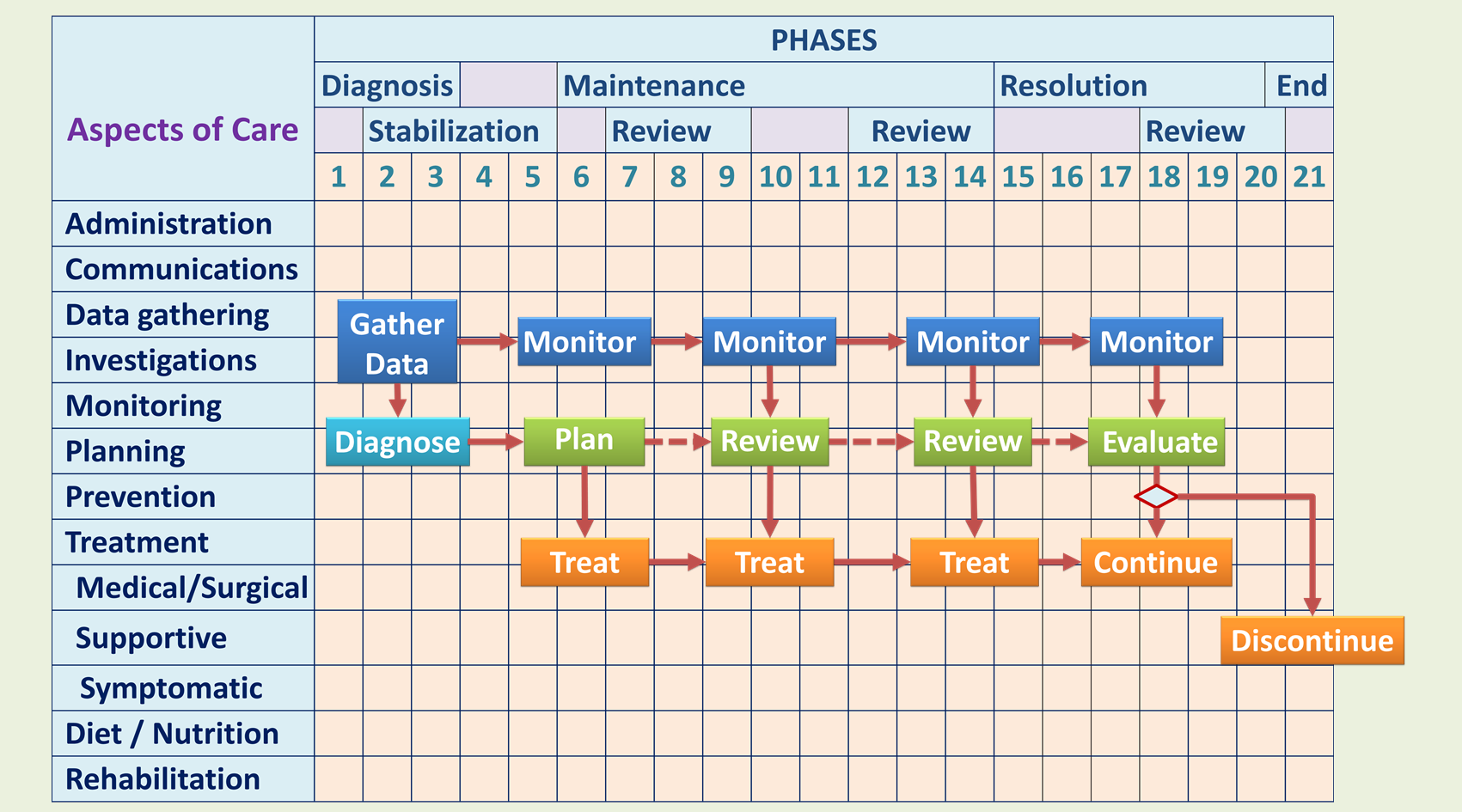
Severe illness requires urgent care at emergency units. Acute illness and uncontrolled chronic illness need inpatient care at the early phase of their care. Certain complex procedures can only be done in an inpatient setting. The outpatient services are suitable for the initial care of acute illness with mild symptoms or effects. It is most suitable for the after care and rehabilitation of all illnesses.

Transfer from one service delivery facility to another depends on the progress from one phase to the next which in turn depends on the success of the procedures performed and the condition of the patient.
Emergency Services
Emergency services cater for patients with acute illness in need of immediate care. Hence, assessment of severity by triaging is a necessary procedure.
The emergency services is unique in its function because it:
- provides facilities for managing emergency patients
- clinical management of emergency diseases and trauma
Patients are severe acute cases including trauma. Patients undergo a triage procedure and allocate to zones based on intensity of care. The initial care is usually done by doctors with qualification or training in emergency services. Patients may then be referred to other specialists.
Outpatient Clinics
For most patients and illnesses, outpatient clinics are the most convenient and appropriate outlet. For the institution it is less costly than inpatient care.
Outpatient clinics are used for the following purposes
- First time visit,
- Follow up visits including after emergency or in-patient care
- Investigations and Preparation for procedures before in-patient or day-care
In this system, services are delivered at clinics. Most clinics are open at business hours (8 am-5 pm). The clinics usually have rooms for consultation and performing procedures. Usually, an outpatient pharmacy is attached.
Patients go through the procedures of appointments, and scheduling. In most hospitals patients are seen by appointments, although at times walk-in patients may be accepted. On arrival they are registered. Resources are allocated and care is given in turns through a queue system.
Inpatient Wards and Units
The system allows for all clinical care processes to be carried out at frequent intervals. Therefore, it is suitable for the care of acute illness and the stabilization of uncontrolled chronic illness who require to stay in the hospital for a day or more. Patients with illnesses requiring time, equipment and staffing level for nursing care, observation, monitoring, performance of tests, preparation for treatment, and immediate after care need to be treated as inpatients.
The system has procedures for admission, transfer and discharge.
The facility provides beds, food plus-beverages and other amenities. Care is usually given by a team of care providers working in shifts over 24 hours. Doctors are available on on-call basis.
Intensive Care Units
When the disease is severe and require intense care, they would be treated at intensive care units (general, surgical, medical, paediatrics, obstetrics).
Daycare Units
This service combines the convenience of outpatient services while allowing for care to be more intense and for a longer period.
Day care services are suitable for patients with illnesses that require care for not more than a day. Just like inpatients they stay temporarily in the unit at rooms, beds, couches or seats. A home visit is another type of service where care providers visit the patient at home. Use of the unit is based on suitability criteria. Patients usually already have a diagnosis and a management plan. It is suitable for the carrying out investigations such as endoscopy and some form of imaging and performing medical, surgical, psychiatric treatment.
The staffing is appropriate to the needs of the procedures being carried out.
This service combines the convenience of outpatient services while allowing for care to be more intense and for a longer period.
Teleconsultation Services
A teleconsultation service enables care provider-patient interaction using information-communications technology such that the care provider remains in the facility and the patient at home. The service is suitable only for certain clinical procedures and patient types.
This service is facilitated by the use of multimedia communications technology including the internet. Various providers in the clinic or hospital interacts with patients at home. This service is suitable only for caring for certain types of patients, categories of illness and carrying out certain phase of the clinical care process.
Home Care
Home visits and self-care complements the service given at the institution. It is suitable for patients who has been stabilized especially at the phase of rehabilitation. Some form of therapy is more suitable to be given at home. or when the patient is debilitated. The service can be given by a care provider individually and or by a team. The care will be given according to the standard clinical care policies and procedures.
Service Products and Standard Operating Procedures of Service Delivery Systems and Facilities
Details regarding the function, services, service products and Standard Operating Procedures are to be given in the plan for each department or unit.
Step 5e – Describing the Clinical Administrative Functions
Administrative functions are concerned with the interaction between patients and service providers. These administrative functions are similar the customer relations management (CRM) of other business organizations. The system is arranged so as to ensure timeliness, efficiency, acceptability, convenience and comfort. The functions of Clinical Administration are listed below:
- Registration
- Scheduling and Appointments
- Resource allocation (rooms, beds, machines)
- Admission, transfer and discharge
Besides being customer-friendly, administrative managers, receptionist and clerks need to ensure optimal use of resources.
Step 5f – Facilitation of Training and Education
Every hospital (especially a teaching hospital) has a training and education function. Care of patients and the service delivery being the main teaching-learning resources should be designed to enable the training-education function., A brief description of this function includes:
- who are involved
- the level of training and education
- the resources and facilitation made available
- coordination with the educational institutions the hospital is affiliated
- supervision of students and trainees while involved in patient care activities
In a university hospital these issues can be complex and must be governed by a dedicated unit. It is expected that the hospital would develop a separate Operations Management Plans for the function of training and education of students at various levels. The plan should be focused on the involvement of students and trainees in patient care activities.
Service Products and Standard Operating Procedures of Student Training and Education
Details regarding the function, services, service products and Standard Operating Procedures are to be given in the plan for each department or unit.
- Staff education and Training
- Student education and training
Step 6 – Describe the Organization of the Institution
Organizing is one of the main functions of a manager. Organization refers to activities such as:
- task allocation (division of labor),
- coordination, and
- supervision
Task allocation refers to defining the job scope of Departments, Units and individuals. The success of patient care depends on the contribution of various sectors working as a team. The scope of functions and responsibilities must be defined.
Coordination refers to measures put in place to encourage members of the organization follow common objectives, policies and procedures. Having an Operations Mangement Plan contributes to achieving this end. It is also important that staff attitudes and behavior reflect the culture of the institution.
Supervision refers to the responsibility to ensure that units or individuals who perform tasks within the manager’s responsibility performs tasks assigned to them according to stated objectives, policies and procedures. The manager not only have the authority, and responsibility to assigns tasks but facilitate the staff under his or her supervision by
- providing guidance by sharing the know-how of tasks are performed
- helping them make decisions
- obtaining feedback on issues and solving them
Leadership and supervision occur at all levels of the institution. The leadership role is usually assigned to managers of the institution, departments and units. However, where a task is performed by interdepartmental or cross-functional teams then the leadership role is given according to agreed convention or to the person considered most suitable.
At the level of upper management of a hospital, the Director or Chief Operations Officer assumes the leadership role in the organization. He must take on the responsibility of managing key tasks and delegate or assign other tasks to assistants.
For this purpose, in the Operations Mangement Plan the following is described:
- Functional divisions
- Allocation of responsibilities
- Relationship between divisions
The latter includes person to provide direction to
- the clinical services (Director of Clinical Services)
- the service delivery facilities (Supervisor of Outpatient, Inpatient, Daycare, and Operation theatre services etc.)
- Heads of various Clinical Departments and Units
- Heads of various Clinical Support Departments and Units
Organizational Structure
There are many ways of organizing an organization. A strictly hierarchical structure is not suitable for a healthcare institution. In most instances the institution is organized according to functions. While the Director or Chief Operations Officer provides the overall leadership, his or her role, with regards the core function, is mostly faciliatory.
In clinical and clinical support departments the structure is flat with few levels of reporting structure. This is because clinical care and clinical support are led by professionals who are experts in their own fields. Even within a clinical department specialists have professional freedom in managing cases. However, uniformity and standardization can be imposed via the Operations Mangement Plan and Standard Operating Procedures.
In hospitals, there are many instances of a matrix structure. In service delivery systems (e.g. clinic, ward, operation rooms), nurses have two separate functions i.e.
- ensuring that the facility is in proper order
- managing individual patients
Hence the function of maintaining the facility is led by a manager usually a sister or matron. For the patient care function, they will be led by the specialist in charge of each patient.
Liaison and Communications
To accomplish objectives, care providers need to interact with one another. This can be within the same service and between services. The interaction can be formal or informal.
Formal interactions include:
- Departmental Meetings
- Circulars & Memo
- Formal e-mail messages
- Recorded ad-hoc discussions (minuted)
- Instructions via posters
- Notices on notice boards
The clinical support services departments and units interact with their counterpart in the clinical services. Both must be aware of each other’s requirements. As such, the workflow and processes must be streamlined to ensure continuity and reduce conflicts. Policies and procedures need to be uniform and understood by both sides. A good way of ensuring good relationships is to create liaison (working) committees who can address issues and improve the workflow and processes. Meetings can be held regularly or when required to discuss various issues. Some of these are usually in place in most hospitals such as:
- Clinical Governance Committee (Clinical Advisory Committee)
- The Operation Rooms Committee
- Infection Control Committee
- The Drug Committee
- Clinical-Pathology Meetings
- Clinical-Radiology Meetings
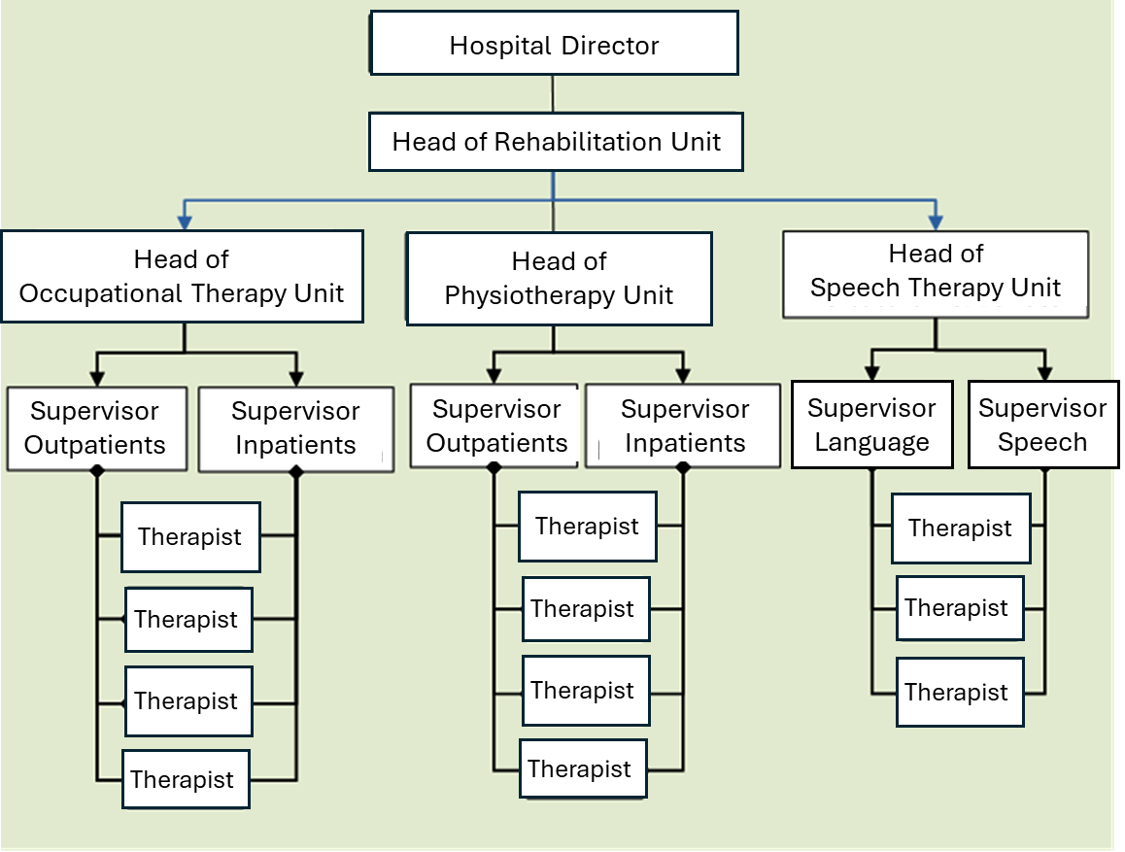
Organization Chart
It is usual to depict the organizational structure and relationships as a chart. An example (without names) is shown below:
Step 7 – Quality Management
It is better to include the Quality Mangement Plans in the Operations Management Plan of the Hospital and in the plan for deparments and units., rather than have it as a separate document. Quality standards, measurement, control and improvement should also be included in the Standard Operating Procedures.
Therefore, explanation is given of the following items:
- Philosophy, policies and objectives regarding quality of services and service products taken by the institution / departments /units
- Approach and Methods
- Process and Outcome standards for servies and service products
I suggest we use the approach of the Quality trilogy (Design, Control and Improvement) put forward by Juran.
Quality Policy
Under this subject, describe the level of quality of processes and outcome the institution hope to achieve in terms of:
- Productivity
- Effectiveness
- Appropriateness
- Efficiency
- Accessibility
- Quality
- Safety
- Privacy and confidentiality of information
Methods
Under this subject, describe the approaches, methods to be used to achieve the quality of processes and outcome. This will include the following:
- Instillation of quality values and work culture
- Continuous learning and training.
- Setting Quality objectives and Standards
- Supervision and monitoring
- Standardization through the Operations Mangement Plan and the Standard Operating Procedures
- Use of Check lists to monitor conformance to policies and procedures
- Quality Measurement using indicators and standards
- Improvement through problem solving
- Customer satisfaction surveys.
General Measure to Improve Quality
The general measure to improve quality include:
- Supervision
- Inculcating cultural values
- Continuous education and training
Quality Control and Improvement
Describe the mechanisms to be taken to ensure to procedures and standards achieve the desired outcome (Quality Control). This includes use of indicators, Key Performance indicators, medical audit and incident reporting. Areas to be looked at includes
- Conformance to Standard Operating Procedures using a check-list
- Outcome of service products in terms of
- Productivity
- Efficiency
- Quality charcteristics
- Safety
- Responsiveness to problems that arise
EDARAN DOKUMEN
Hanya satu Dokumen Pelan Pengurusan Operasi perlu disediakan oleh setiap institusi/jabatan/unit. Dokumen dalam bentuk soft copy atau salinan bercetak perlu diedarkan supaya dibaca dan difahami oleh semua anggota unit/jabatan/institusi. Hanya satu versi sahaja sepatutnya berada diperedaran. Versi lama perlu ditarik balik supaya tidak digunapakai lagi.
Jika pengedaran dibuat melalui sistem berkomputer, ia diletakkan didalam folder gunasama. Aksesnya boleh dihadkan kepada pengguna tertentu dengan menggunakan teknik kawalan akses seperti kata laluan atau kad laluan.
Jika pengedaran melibatkan dokumen bercetak, salinan perlu disimpan ditempat berikut:
- Bilik Ketua institusi/Jabatan/Unit
- Pejabat Jabatan/ Unit (untuk rujukan semua kakitangan)
- Pejabat Ketua Eksekutif (Pengarah) institusi
- Pejabat Pengurusan Tertinggi (Ibu Pejabat, Pejabat Korporat, Bahagian/Kementerian)
Disamping itu, salinan boleh diletakkan ditempat bekerja, terutama jika ianya berada ditempat yang berasingan serta jauh dari pejabat/fasiliti utama unit/jabatan.
 HEALTHCARE SERVICE DELIVERY